Services
Machining services
Drilling, tapping, milling, and turning that add accurate holes, threads, slots, and finished surfaces to fabricated and stock parts.
The precise features that finish a part
Fabrication gets a part to shape. Machining makes it precise. We drill and tap holes, mill slots, pockets, and flats, and turn round parts like shafts, bushings, and spacers.
Because we machine in the same shop where we weld, we can finish critical features after welding. Hole patterns, bores, and mounting faces end up exactly where your print says, not where the heat moved them.
Our machining equipment
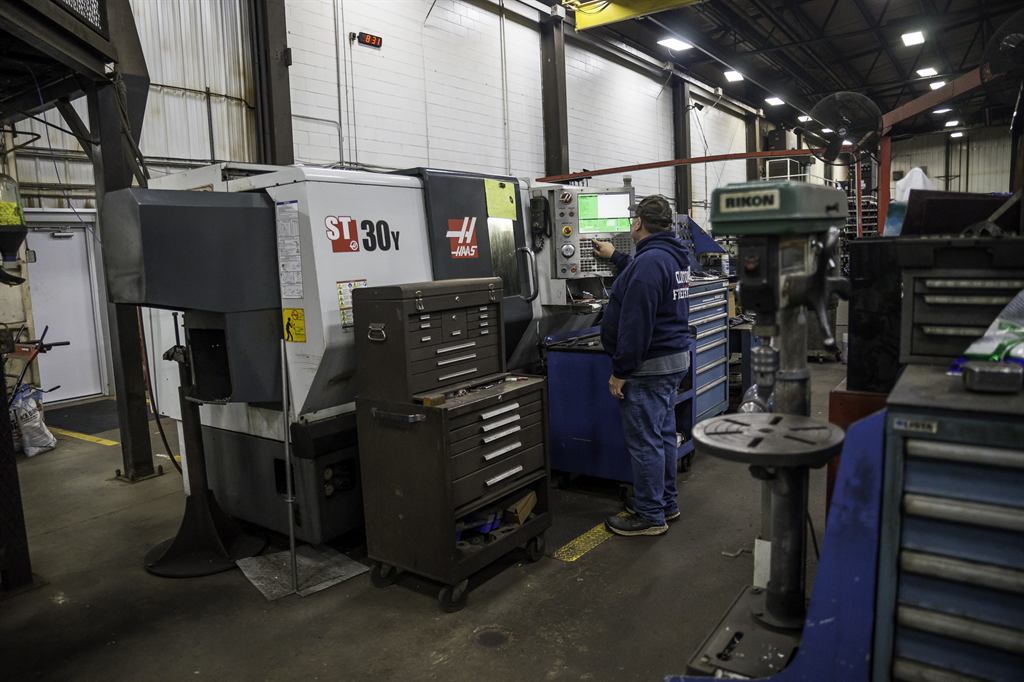
- Haas ST-30Y CNC lathe with Y-axis for milled features on turned parts
- Haas ST-10 CNC lathe
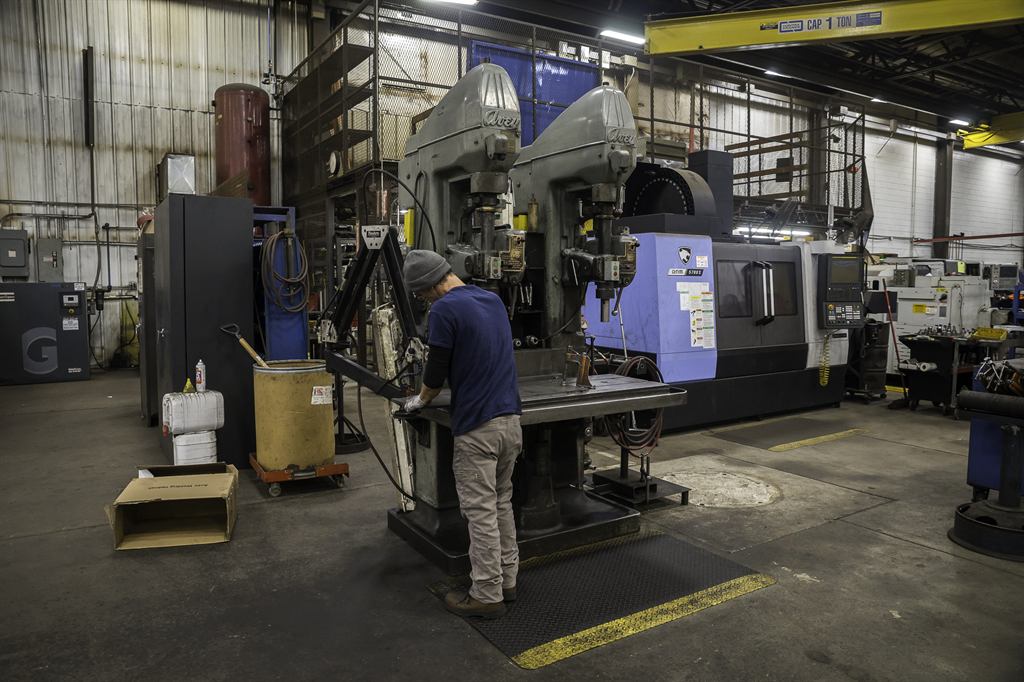
- Doosan DNM 5700S CNC vertical machining center
- Fortune 20120G lathe and Summit Bridgeport mill for manual work
- Avery twin-spindle drill and Wilton 2456 drill
What we machine
- Drilling, reaming, counterboring, and tapping
- Milling slots, pockets, flats, and squared edges
- Turning shafts, bushings, pins, and spacers
- Finish machining of weldments
- Repair machining: re-boring, re-tapping, and resurfacing
Design tips for machined parts
These general guidelines make machined parts faster to produce and less expensive.
Every tight tolerance adds time and cost. Call out the critical dimensions and let the rest fall to standard tolerances.
Cutters are round, so pocket corners will have a radius. Making it at least one-third of the pocket depth speeds up machining.
Deep pockets need long, slow tools. Keep depth within about four times the pocket's length, and shallower when you can.
Threads deeper than about 3 times the hole diameter rarely add strength. Leave a little unthreaded depth at the bottom of blind holes.
What to send for a quote
A dimensioned drawing (PDF) with tolerances and thread callouts, plus a STEP file if you have one. Mark which features are critical so we know where precision matters most.
What tolerances can you hold?
It depends on the part, the material, and the feature. Tell us which dimensions are critical and we'll confirm what we can hold before we quote. Saving tight tolerances for the features that need them keeps the cost down.
Can you machine a part after it's welded?
Yes, and for critical features we recommend it. Welding heat moves material, so finishing holes and faces after welding keeps them where your print says.
What should I send for an accurate quote?
A drawing or CAD file (PDF, DXF, DWG, or STEP) is ideal, but a clear sketch or photo with key dimensions works too. Include the material and thickness, the quantity, any finish requirements, and when you need the parts.
Related services
Need features machined?
Send your drawing and get a free estimate.